
Close the channel on this De Stijl page and the notices become one
Close the channel and the notices mix. The black bar was the limit. Without it the page becomes one block again.
On this page of De Stijl each notice takes a block. The red marks the one that is read first. The others are black.
The bar is not an ornament between texts. It is the edge that keeps one idea from eating the one beside it.
You can count the blocks with your thumb. If you do not know where one ends, the channel is closed or it never existed.
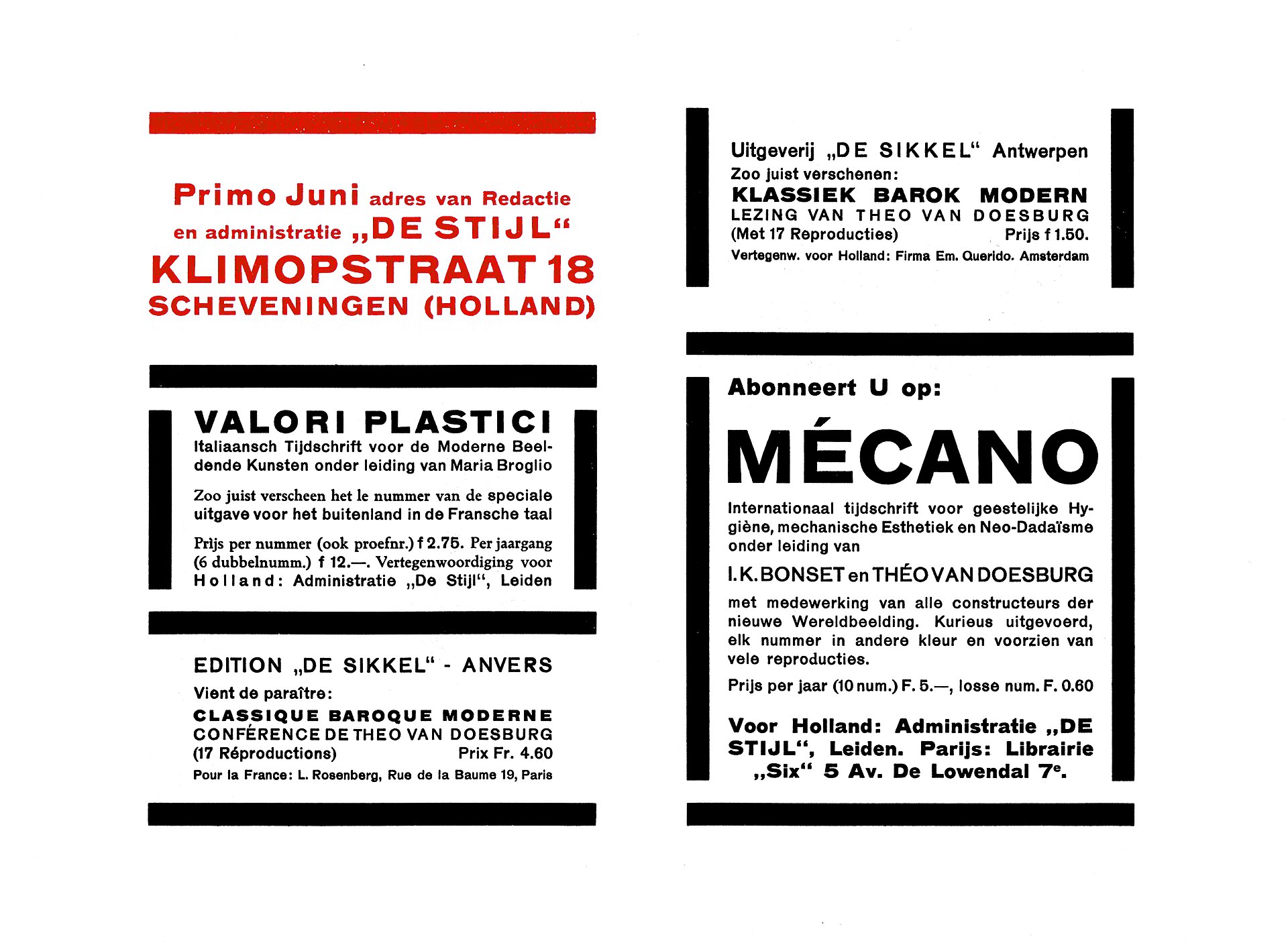
Two or three
You can build the piece with two or three blocks. If each one asks for the same attention, the grid is not ordering.
One enters first. It can be by color, as here, or by size. The others wait.
A fourth block fits if it brings a fact the three do not bring. If it repeats, remove it and give the air back to the channel.
The channel is part of the system too. Measuring it is as concrete as measuring the column. If you close it so more text fits, you lose the page.
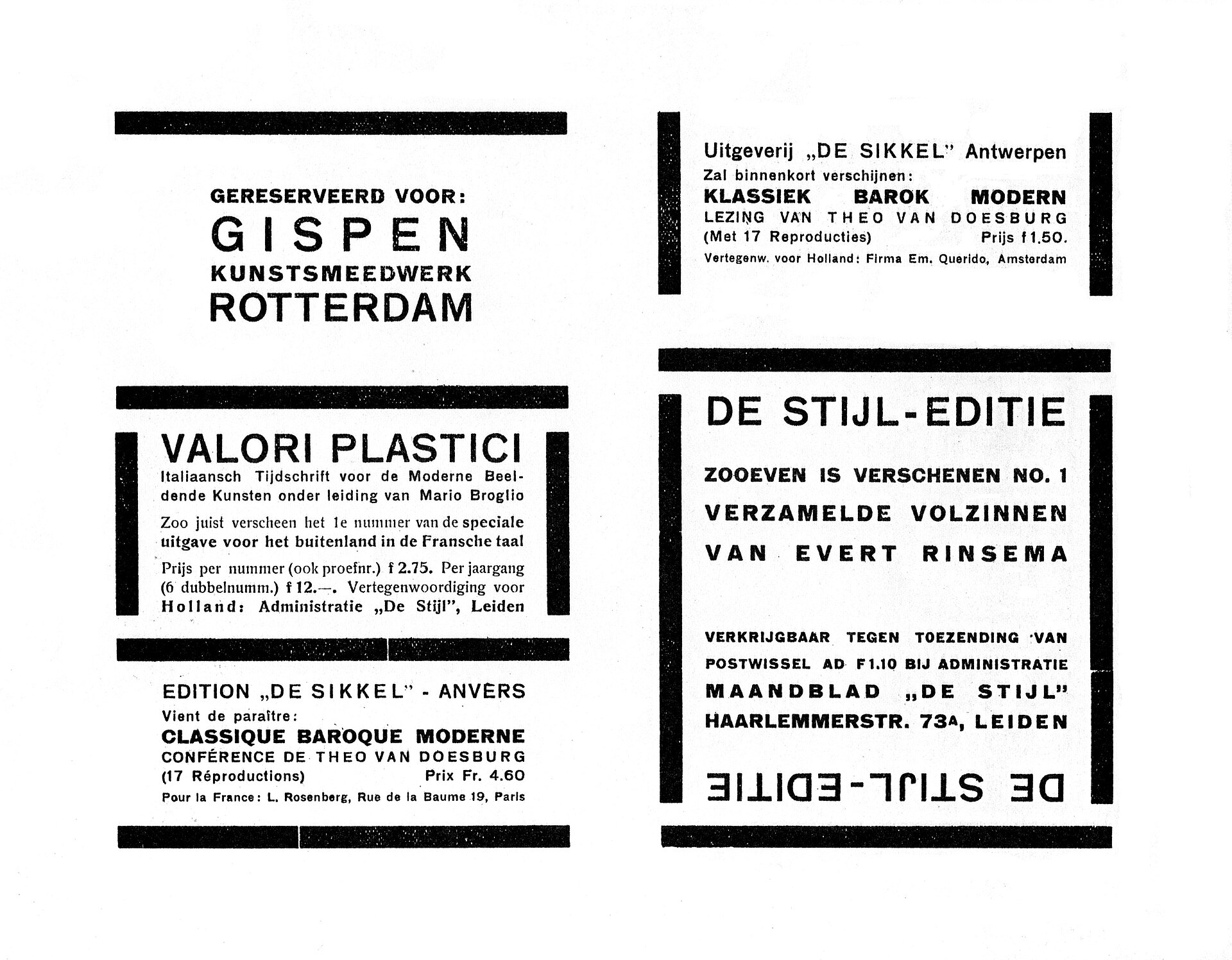
The same system
On another page the blocks change size and the channel remains. The grid does not depend on everything being red or on everything being the same size.
You can use the grid to separate subjects, not to fill gaps. An empty gap is better than a notice that did not have to be there.
If you print the page and cover the bars, see whether you still know which text belongs to which idea. If you do not, the channel was the only thing ordering.
You can draw the channel first, empty, and then set the notices. If the notice does not fit, the notice is cut. The channel is not closed.
The black bar on this page is a channel you can see. On another piece the channel can be air alone. The job is the same. To separate.
If every block asks for the same thing, open one with color or with size and leave the others still. The grid orders when one enters first.
A page of notices is read by blocks. A page of account is read by paragraphs. Do not ask them for the same channel.
Share