
Step back from Van Doesburg's poster and the letter still says the word
Step back until only a blot remains. If the blot still says the word, the letter is the image.
Theo van Doesburg built the poster with the letter. There is no figure beside it. The word takes the plane and is read by its size.
The letters are black and geometric. The paper is light. There is no second drawing to explain what the word already says.
When the letter illustrates and also informs, one of the two has to lead. If both weigh the same, neither is read.
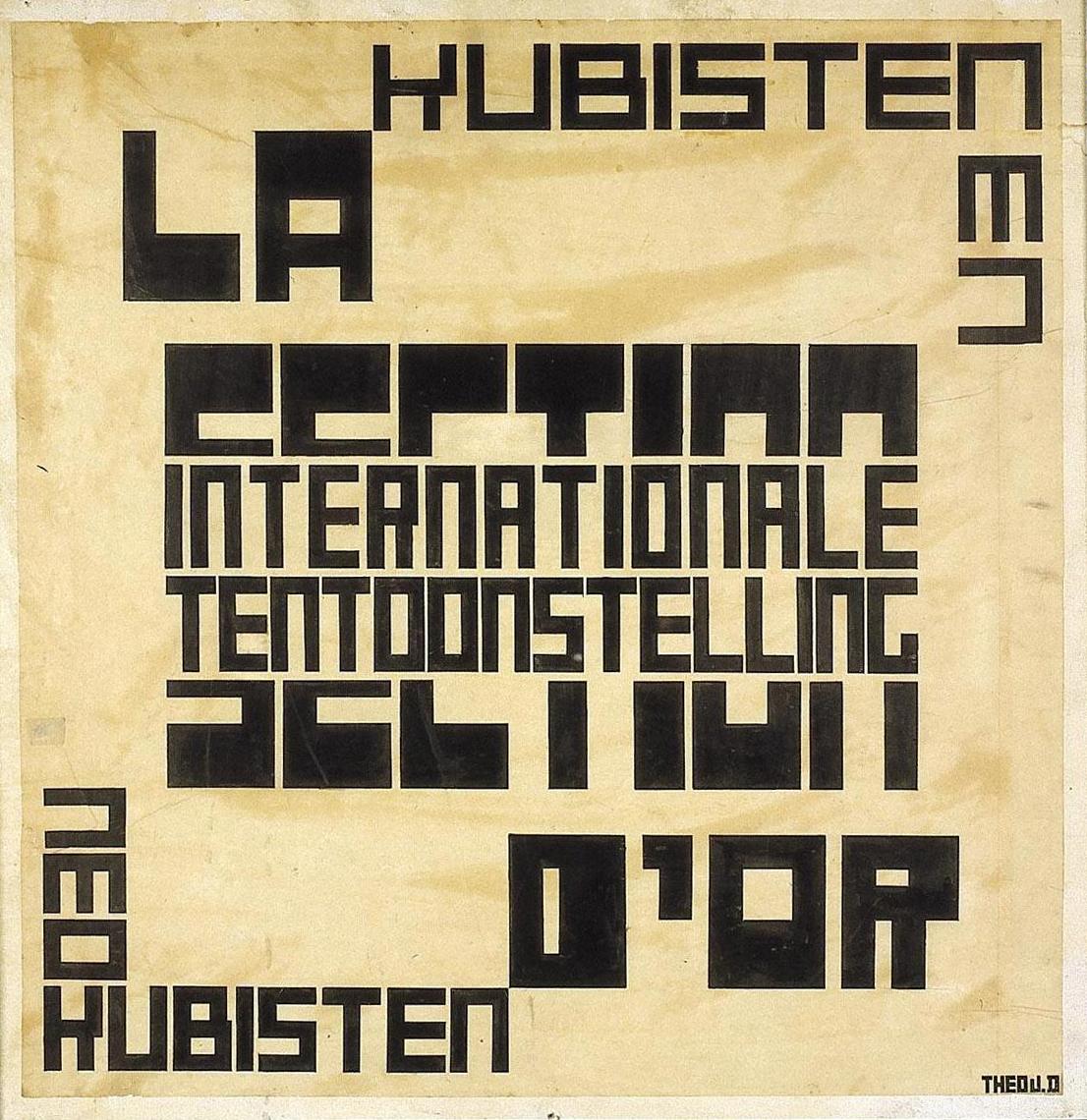
The blot
You can run the test in the corridor. If as you step back the word becomes an ornament, the stroke won and the reading lost.
An unusual stroke is justified if it helps reading. If it is only looked at, it is too much.
A figure beside the word asks for another look. Van Doesburg's poster does not ask for it. The whole plane is the word.
You can leave a small fact, the place or the date, in a size that does not compete. The title remains the image.
What leads
Decide first which of the two leads. If the image leads, the word can be short and huge. If the information leads, the stroke stays still.
Both at once produce a poster that is looked at and not read, or a text that is read and not remembered.
On a network the test is harder. The frame is small and the word has to keep saying something when it is reduced.
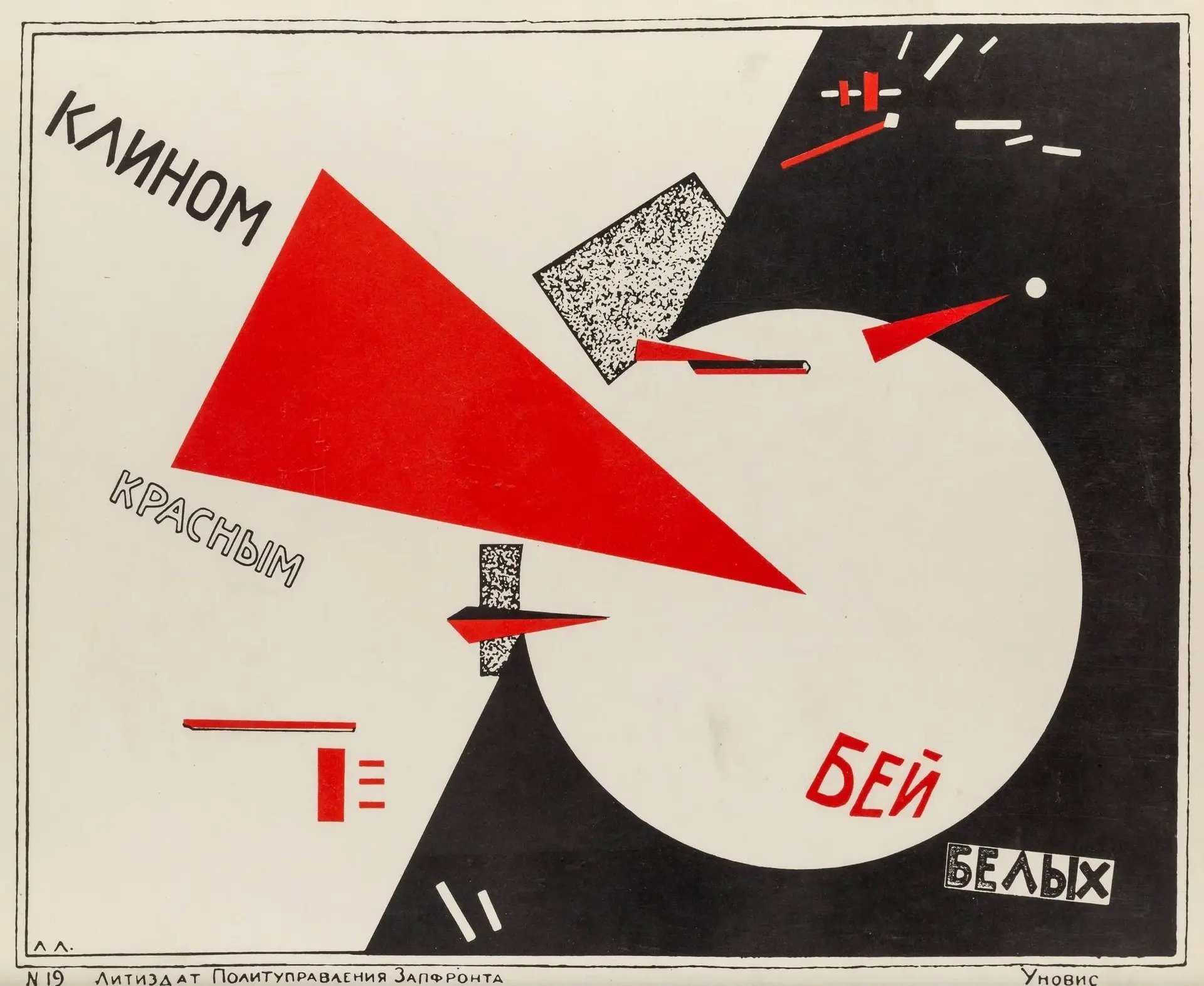
On Lissitzky's poster the form leads. The letter, if it enters, confirms. On Van Doesburg's the letter leads. There is no form beside it to explain it.
You can put the two tests together. On one, cover the letter and see if the idea remains. On the other, step back and see if the blot still says the word.
If both fail, the piece is half done. Either the form is not enough, or the letter does not hold without the large size.
If reducing it leaves only a mute blot, the letter was not the image. It was a drawing that depended on the large size.
Share